
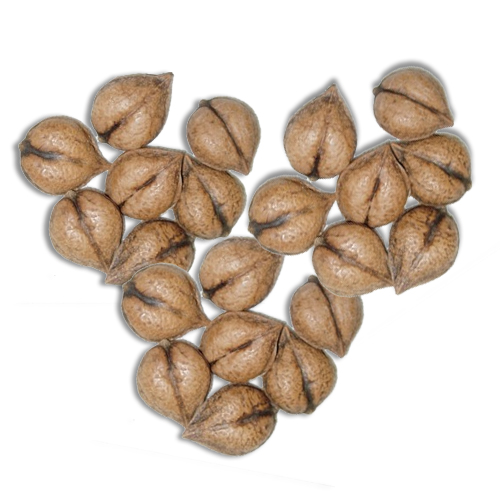
Heartnuts Nutrition Guide and Health Facts
Heartnuts
The heartnuts (Juglans ailantifolia), also known as the Japanese walnut, is a walnut species that is native to Japan and Sakhalin. The nuts of these trees are edible and possess and oily texture. The husks of the tree are used in making a yellowish dye. The heartnut tree has an excellent ornamental feature with its bold and decorative leaves with attractive catkin appearance during the springs. These trees are very similar and closely related to the American butternut and are resistant to the canker disease which has led to its plantation as a replacement to the butternuts.
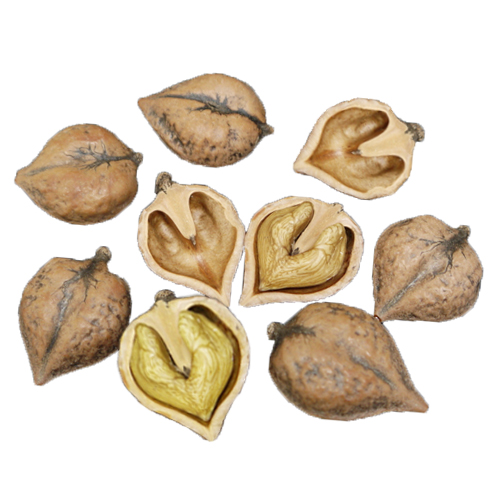
The heartnut is a Japanese species of the walnut that is identified by the heart-shaped cross section of its fruit, as the name suggests. These nuts are easier to crack, and yield unbroken meat upon cracking. The heartnut trees are selected for various important features of the nut, out of which the important ones are cracking quality, production and kernel quality.
How it is Cultivated
The heartnut tree is best suited to properly drained fertile land and clay loam soils with a pH mark of 6 to 7. Heartnuts begin to produce two or three years after planting and begin producing a commercially viable crop in 6 to 8 years. The buds are the first to open in the spring and are sensitive to cold spells in April and May. They are resistant to the widespread walnut blight, but in some areas, some years, may have a percentage of their nuts attacked by a weevil (Curculio carytrypes and C. sayi).
How it is Grown
The heartnut tree will grow in colder regions, it can be affected by late frosts. Since the tree is terminal bearing, the nut flowers are sheltered in the tip buds of the trees. Frost injured flowers minimizes the crops due to abortion. Good quality seeds also would require proper and continuous irrigation of over 6 weeks of dry spell. It is a deciduous tree that grows tall up to 20 meters and has a light grey bark.
Heartnuts
These trees are only partially self-pollinating, and thus it is advisable to plant two or more different grafted selections to achieve best results in terms of high quality heartnuts that are high on nutritional content. The lush green widespread leave canopy of the heartnuts are resistant to most of the insect pest attacks.
Health Benefits
- The heartnuts are bite-size power packed nutritional sources with high mineral content.
- The high quality heartnuts that are high on nutritional content and As a result, the nutritional value of the heartnuts is never reduced considerably.
- They have formed an important part of human diet as a nutritive supplement since a long time now. It resists to the canker disease.
- Eating heartnuts is a good way to a long and healthy life as discovered by many researchers worldwide.
Nutrition Values
A long-term study extending over 3 decades reveals various lifestyles of 120,000 female nurses and male health professionals. Those consuming 28g or more of these nuts several times a week were 13% less likely to die during the studies, reported researchers in a medicine journal of England. It is sweet in taste devoid of bitter aftertaste unlike other species of walnut.

Heartnuts Nutrition Guide And Health Facts
(Visited 2,830 times, 4 visits today)